Maturity model for multi-factor authentication (MFA)
Ongoing development instead of a one-off project
Multi-factor authentication is now an indispensable component of IT security. In practice, however, it is clear that MFA is not something that can simply be switched on. Companies differ greatly in terms of their system landscapes, user groups, and individual protection requirements.
This is precisely where the MFA maturity model comes in. It describes the typical development stages of an MFA strategy, from classic password-based access to completely passwordless and centrally controlled authentication procedures. Each stage represents a comprehensible step forward and reflects a realistic situation as found in many organizations.
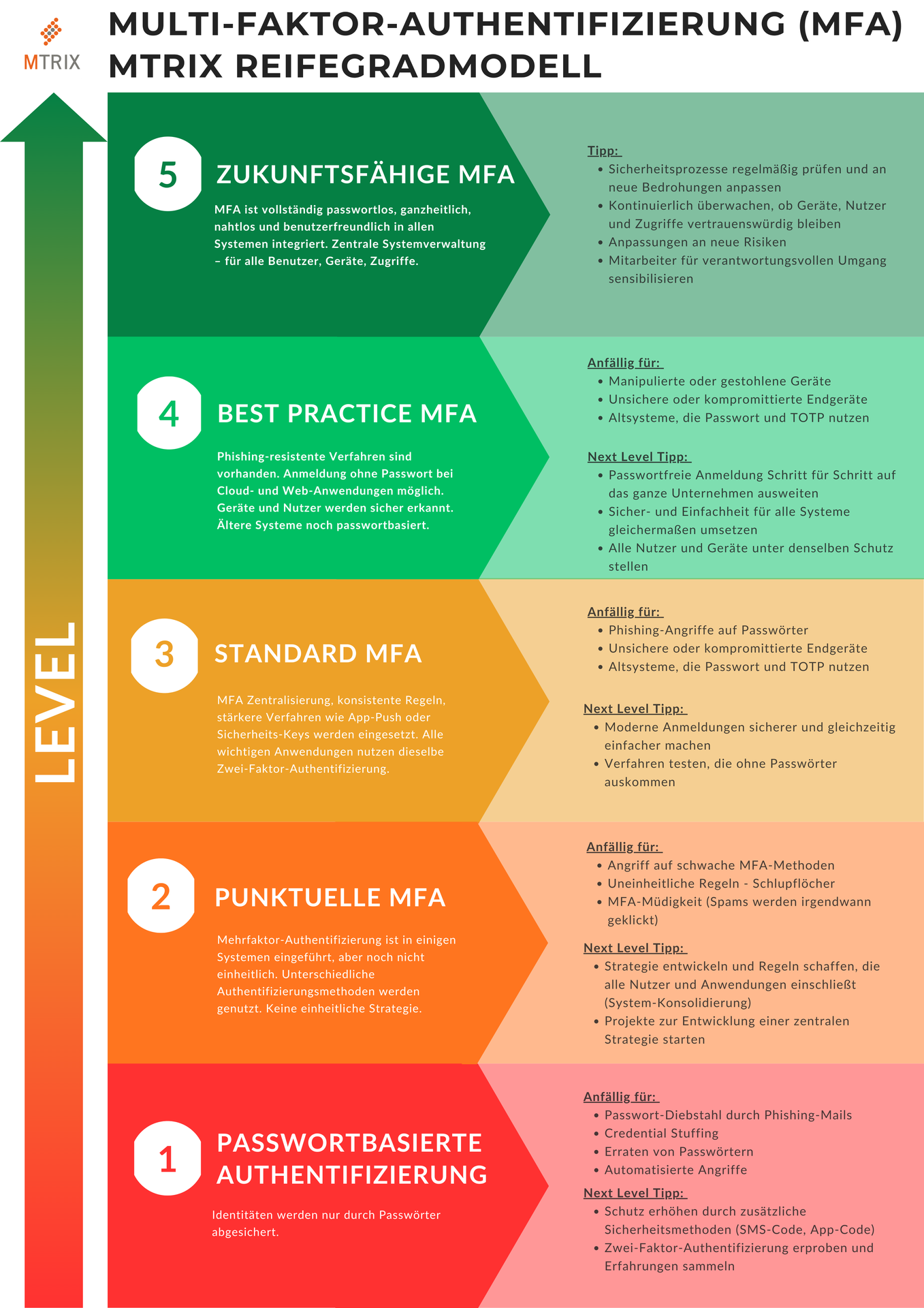
The goal of the maturity model:
- Provide guidance
- assess one's own status quo
- derive sensible next steps
This is how the model is structured
The MFA maturity model does not view authentication in isolation as a technical function, but rather as the interplay of several success factors:
Authentication procedure
From classic passwords to one-time codes and push procedures to FIDO2 standards and completely passwordless logins.
Integration & Coverage
How consistently is MFA used? Is it only sufficient for individual applications, or is it consistently integrated across systems, user groups, and identities—all the way up to a central identity platform?
Usability & Operation
How intuitive is the registration process for users? How much support is required? And how efficiently can issues such as device replacement, recovery, or onboarding be handled?
Only the interplay of these dimensions determines how secure, stable, and sustainable an MFA strategy really is.
Get a free, no-obligation consultation!
Discuss your current situation with us to find out which steps make sense for you and which do not.
Get a free, no-obligation consultation!
Discuss your current situation with us to find out which steps make sense for you and which do not.